The useful part first
Key takeaways
- Use sewer rodding when the line is obstructed by buildup, paper, sludge, or similar material and you need the blockage opened.
- If several drains are slow at once, the issue is more likely in the shared sewer than in one sink or tub.
- A cleanout, if present and safely accessible, can shorten the visit by giving the contractor a direct entry point.
- If the line clears but symptoms return, that points toward a follow-up discussion about roots, slope, buildup, or damage.
A backed-up sewer line is usually handled by clearing the obstruction, checking how the line responds, and then deciding whether a follow-up inspection makes sense. The key question is whether one drain is acting up or the shared main line is involved.
If wastewater is coming back up, pause water use and do not run fixtures to recreate the problem. That keeps more water out of the line and gives the responding contractor a cleaner starting point.
Maywood’s local code library addresses sewer connections, stormwater drainage, and maintenance responsibilities, but a code table of contents does not settle every private-versus-public question. For a boundary issue, the contractor may still need to compare what you’re seeing with the Village language in the local sewer and water chapter.
What sewer rodding does, and what it does not do
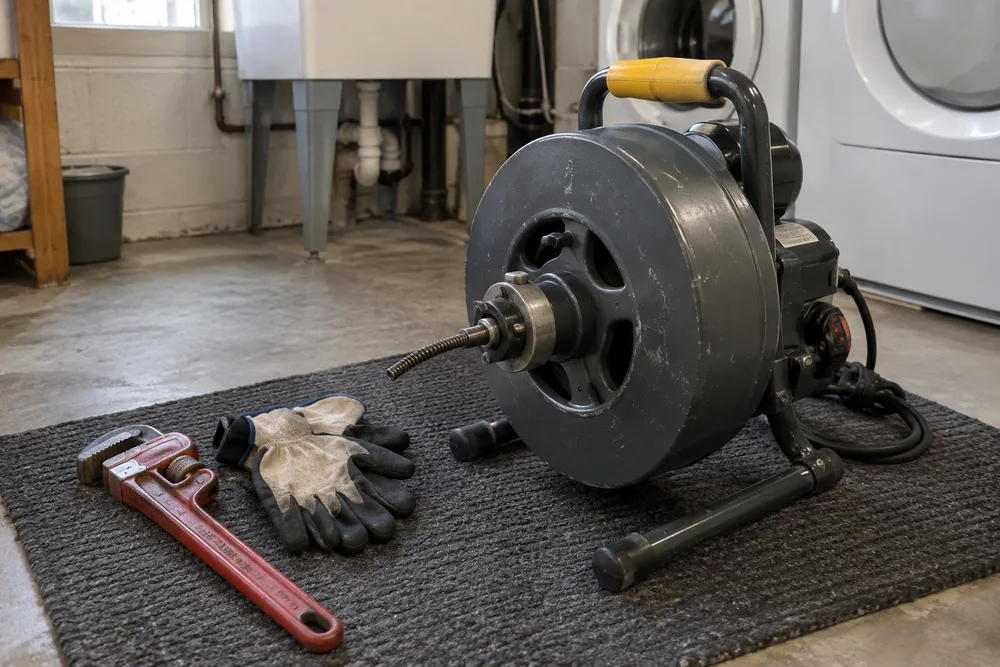
Sewer rodding uses a flexible cable with a cutting or clearing head to break through an obstruction in the sewer line. It’s commonly used when the line is blocked by paper buildup, grease, minor debris, or a root mass that has narrowed the opening.
Rodding is a clearing method, not a repair method. It can reopen a path for wastewater, but it does not fix a cracked pipe, shifted joint, or entry point that keeps letting roots back in.
That distinction matters when a homeowner wants one visit to solve everything. A line can run normally after rodding and still need a separate inspection if the backup comes back soon afterward.
- Clears a blockage in the line
- Works through many existing cleanouts
- May restore flow without excavation
- Does not correct pipe damage or poor slope
When rodding makes sense
Rodding is often the first practical step when the sewer is stopped up and you need flow restored without guessing at the exact cause. It fits situations where the symptoms suggest a physical clog rather than a fixture-only issue.
It also fits a line that has slowed gradually and now drains poorly from several places. In those cases, the contractor may clean first, then decide whether the pipe should be inspected afterward.
When another step may be added
If the blockage clears but there’s evidence of recurrence, a camera inspection may help show whether the line has root intrusion, standing water, offset joints, or heavy buildup. That next step is about seeing the condition of the pipe, not repeating the same cleaning.
How the visit usually unfolds
The first conversation usually starts with the symptoms: what backed up, which fixtures are slow, whether the issue is constant or intermittent, and whether you have an accessible cleanout. That information helps the contractor bring the right equipment and choose the safest entry point.
One missing detail can change the recommendation. For example, a kitchen sink that drains slowly by itself points to a fixture line issue, while wastewater appearing in a basement floor drain when a toilet is flushed points toward the main sewer or a shared branch.
If the problem is still active, the contractor will usually want to see the symptoms as they are, then stop the flow and begin clearing from the best access point. That keeps the line from being overloaded while work is underway.
After the blockage opens, the contractor may run water and watch how quickly it moves away. If it drains cleanly, you may be done. If it hesitates, backs up again, or gurgles in several places, the line may need more than one pass or a different method.
- Describe every affected fixture
- Mention any recurring pattern
- Point out a cleanout if you know where it is
- Expect a clear explanation of the next step after clearing
Safe homeowner prep
If wastewater is backing up, stop using sinks, tubs, toilets, dishwashers, and laundry until the line is evaluated. Don’t keep testing the system just to prove the backup is still there.
If you already know where the cleanout is, make the area reachable. But do not try to open a pressurized or backed-up cleanout yourself. That’s a contractor task, and forcing it can turn a messy backup into a bigger problem.
Water backing up now?
Pause water use and call. Emergency calls are accepted 24/7.
What Maywood homeowners should keep in mind
Maywood publishes sewer-related rules and maintenance provisions, so the question is not only what’s clogged but also where responsibility may fall. A contractor may need to distinguish a private sewer issue from something that involves a public connection or a disputed boundary.
That’s why the local chapter matters, but only as a starting reference. The actual work decision still depends on what the line is doing, where access exists, and whether the blockage appears on the private side of the system.
For a homeowner with a recurring backup after a rain event, the local source may be relevant, but it still doesn’t replace an onsite look. If you want to understand how symptom timing changes the conversation, see the sewer backup guide for the broader decision framework.
- Local rules may matter when the issue touches a public connection
- Private line symptoms can look similar to public-system symptoms
- Rain timing can change the questions the contractor asks
A practical example
For example, suppose a basement floor drain overflows after a toilet is flushed upstairs. The contractor would likely treat that as a shared-line problem first, not a basement-drain-only problem, because the trigger comes from another fixture. If the line clears but the backup returns a few days later, the next conversation would shift toward recurring obstruction or pipe condition, not just another pass with the cable.
How rodding compares with related services
Rodding is one of several ways to deal with sewer problems, and the right choice depends on what the line is doing. A fixture drain cleaning handles a sink, tub, or toilet branch. Hydro jetting uses high-pressure water to scour heavier buildup. A camera inspection looks at pipe condition after, or sometimes before, cleaning.
If the clog is localized to one fixture, main sewer rodding may be unnecessary. If several drains are involved, the shared line becomes more likely and the scope changes.
The fastest way to sort that out is to match the symptom to the service. A kitchen sink issue belongs with kitchen drain cleaning if the blockage stays at the fixture. A broader backup belongs with sewer rodding when the main line is the likely restriction. If the line keeps failing after cleaning, camera inspection can help show why.
- Fixture-only problem: focus on the affected drain
- Shared backup: consider the main sewer line
- Recurring clog: consider inspection after clearing
- Heavy buildup: jetting may be discussed instead of rodding
Why one symptom matters more than the brand of tool
Homeowners often ask for a particular tool, but the tool only matters after the symptom is clear. A cable can be the best answer for one line and the wrong answer for another. If the line is packed with greasy buildup, a different cleaning method may be discussed. If the line appears damaged, cleaning alone won’t solve the cause.
What happens after the line opens
Once the blockage is cleared, the work is not finished until the contractor checks that water is moving normally. That may mean running fixtures briefly, watching the drain pattern, and asking whether the symptoms have changed.
If the line stays open and drains properly, the next step may simply be normal use with a note to watch for recurrence. If it backs up again, that new information changes the plan. The likely next question becomes whether roots, buildup, or pipe damage are still present.
A one-time backup and a repeat backup are not the same story. A clean clearing followed by another failure often points to a deeper issue, which is why many homeowners pair the clearing with a later inspection if the history suggests it.
- Confirm the line actually drains after clearing
- Ask what the contractor observed during the job
- Treat recurring symptoms as new evidence
When a follow-up is worth discussing
A follow-up becomes more useful when the same line has clogged more than once, when backups happen in wet weather, or when the line clears only partially. Those patterns do not prove damage, but they do justify a closer look.
Good questions to ask before you book
A short, specific conversation saves time. You do not need to diagnose the pipe yourself, but you should be ready to describe the symptoms clearly and ask practical questions about access and next steps.
Ask whether the contractor wants to start at a cleanout or another access point. Ask what would make inspection necessary after the line is opened. And ask how they want you to behave if the backup is still active when they arrive.
If you want to understand the intake and routing side of the process, the referral process page explains how an inquiry moves to a participating contractor. For onsite expectations, the visit process guide covers what typically happens during the appointment.
- What symptoms should I mention first?
- Is there a safe access point already available?
- What would make you recommend inspection after cleaning?
- What should I avoid doing before the visit?
How to prepare without overdoing it
Keep the area around the basement cleanout, floor drain, or utility space reachable if you know where the problem is likely to be. Gather a quick list of affected fixtures, whether the backup is constant, and whether rain or laundry seems to trigger it. That’s enough to get the conversation started without trying to troubleshoot the line yourself.
Sewer rodding versus nearby service choices
| Situation | Best starting service | Why it fits |
|---|---|---|
| One fixture is slow or clogged | Fixture drain cleaning | The problem appears limited to a sink, tub, toilet, or similar branch. |
| Several drains are affected at once | Sewer rodding | That pattern suggests the shared line may be restricted. |
| Line clears but keeps failing | Camera inspection after cleaning | Recurring symptoms often need a look at pipe condition. |
| Heavy buildup is suspected | Hydro jetting may be discussed | Some deposits need a stronger cleaning approach than a cable. |
Questions homeowners ask
How do I know if I need sewer rodding instead of drain cleaning?
If only one fixture is slow, it may be a branch-line problem. If multiple drains back up or gurgle together, the shared sewer line is more likely and rodding becomes the more relevant service.
Should I keep testing the drains if wastewater is already backing up?
No. Pause water use and don’t run fixtures to recreate the problem. More water can overflow the same line and make the visit harder to start.
What if the line opens but the backup comes back later?
That usually means the clearing helped, but it didn’t solve the underlying cause. The next step may be a camera inspection to look for roots, buildup, offset joints, or another obstruction point.
Can sewer rodding be done through any opening?
No. The contractor needs a safe access point, often a cleanout. If one is present, make it reachable, but don’t try to open a pressurized or backed-up cleanout yourself.
Does a cleared sewer line mean the pipe is in good shape?
Not necessarily. Clearing only proves the obstruction was removed. If the same line keeps clogging, the pipe may need a closer look before the problem becomes a repeat emergency.
Local resources
Use these official resources for municipal or utility information. They are separate from Plumbers 911.